 Image 1 of 2
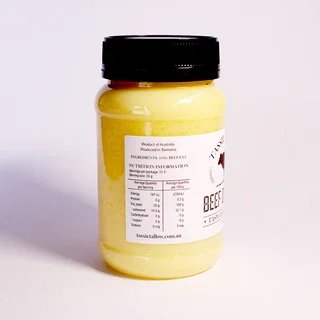 Image 2 of 2
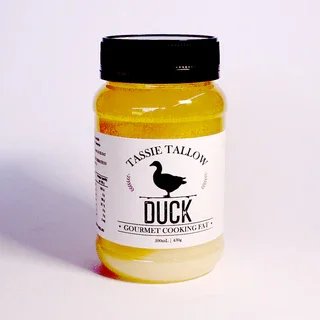
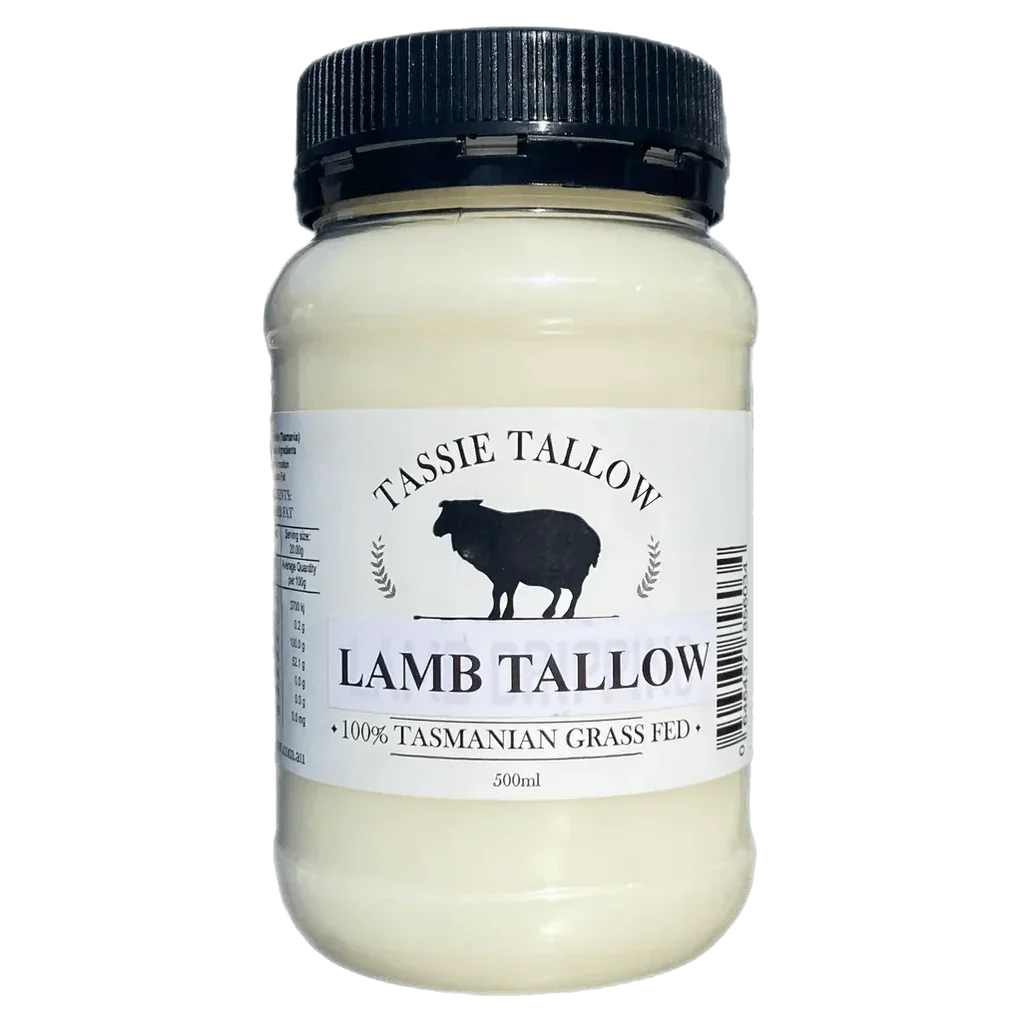
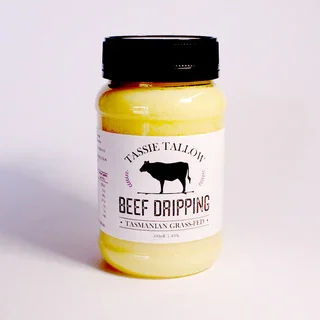
Tassie Tallow Beef Dripping 500ml



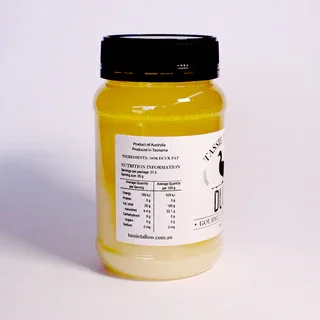
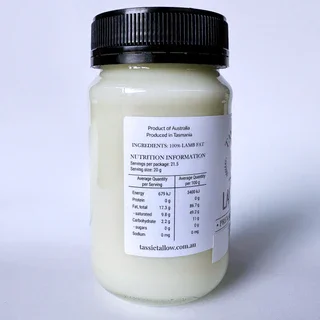
Nutritional Information
Tallow vs dripping — what’s the difference?
Source
Tallow: Rendered from suet, the hard fat surrounding the kidneys and loins. Suet is highly vascularised and nutrient-dense.
Dripping: Rendered from subcutaneous (body) fat collected from around the carcass, often after roasting.
Texture and appearance
Tallow: Firmer at room temperature; holds its shape well.
Dripping: Softer and easier to spread, especially when from free-to-roam, grass-fed animals; often a warm golden colour.
Nutrient profile
Tallow: Rich in conjugated linoleic acid (CLA) because suet is nutrient-dense. CLA and fat-soluble nutrients are more concentrated in suet-derived tallow.
Dripping: Still a good source of animal fat and fat-soluble vitamins, but generally lower in CLA compared with suet-derived tallow.
Cooking properties
Both: Excellent for frying and deep-frying due to a high smoke point around 250°C. Both produce crisp, well-browned results and impart savoury, beefy flavour.
Choose tallow when you want a firmer fat for pastry, suet-based puddings or applications where solidity at room temperature is useful.
Choose dripping for spreading, pan-frying or when a softer, more buttery mouthfeel is preferred.
Sourcing considerations
Grass-fed / pasture-raised animals: Both tallow and dripping will have better colour, flavour and a healthier fatty-acid profile when sourced from animals raised on pasture.
Processing: Traditional gentle rendering preserves flavour and nutrients; overcooking can degrade delicate compounds.
Storage and shelf life
Both: Stable fats when properly rendered and stored in a cool, dark place or refrigerated. Tallow’s firmer consistency can make it slightly easier to store at room temperature.
Practical use guide
Use tallow for pastry fats, making suet crusts, high-heat frying and when you want a solid fat for shaping.
Use dripping for roast potatoes, pan-frying, spreading on toast (if you like animal fats), and recipes where a softer, more spreadable fat is desirable.
Bottom line: Both are excellent high-heat cooking fats with similar smoking points, but tallow comes from suet and is firmer and richer in CLA, while dripping comes from subcutaneous body fat, is softer and often more golden — especially from grass-fed animals. Choose based on texture and culinary use.